

Walking Through Inspiration: What Stood Out on the Artisan Home Tour
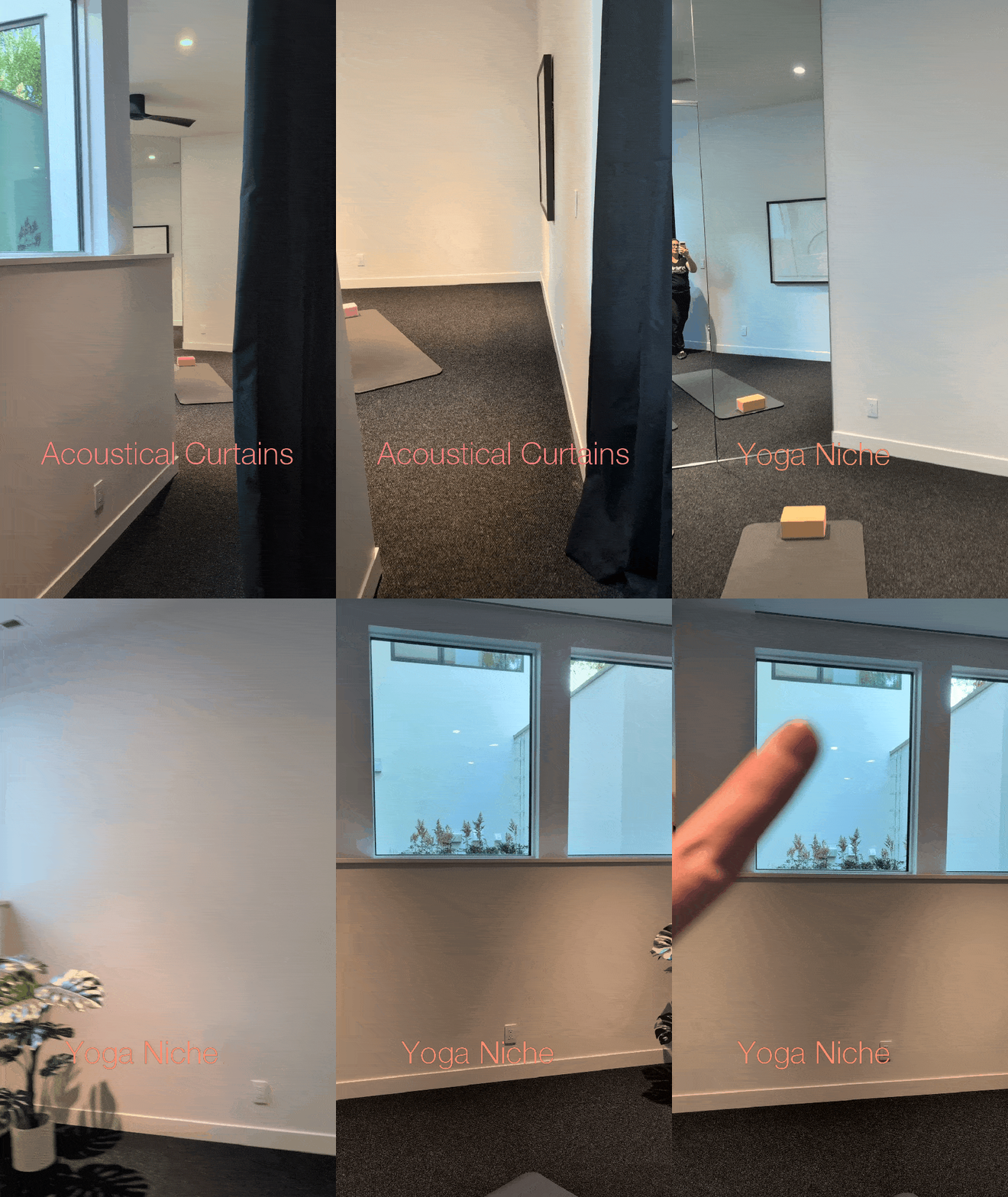
There is something uniquely inspiring about walking through a home that has been so intentionally designed. The Artisan Home Tour offers that opportunity—not just to see beautiful spaces, but to experience how design, materials, and layout come together to shape a home's feel.
This year, I toured Homes #2, #6, and #8. Each offered a different perspective—and together, they revealed not only standout craftsmanship, but also several important design trends worth paying attention to.
The Homes That Stood Out
Each home told its own story—and highlighted how design impacts both aesthetics and daily living.
Home #2 showcased a wide range of finishes and architectural details, reflecting the creativity and craftsmanship of the builder, designer, and architect. There were many thoughtfully designed elements throughout, creating a visually rich environment. At the same time, the layering of multiple materials, textures, and transitions made the space feel more visually active. For some, this can feel energizing; for others—especially those who prefer a calmer, more cohesive environment—it may feel less grounded. It's a reminder that great design is not just about variety, but about how seamlessly everything comes together to support comfort and ease.
Home #6 felt refined and well executed, with a consistent, cohesive approach throughout. It did not rely on bold design moments, but instead offered simplicity, clean lines, and an intuitive layout. There was an ease to how the home flowed—nothing competing for attention, nothing overwhelming. While it may be considered more "average" than others on the tour, it excelled in terms of livability. From a neurodiversity-friendly perspective, that restraint and consistency created a calm, supportive environment that many homeowners truly value.
Home #8 was the quiet standout. It struck a beautiful balance between elevated design and cohesion, allowing materials, lighting, and architectural details to work together rather than compete. The result was a home that felt intentional, refined, and grounded—creating interest without overstimulation. It's an approach that feels especially relevant in today's design landscape.
Design Trend: Lighting as an Experience
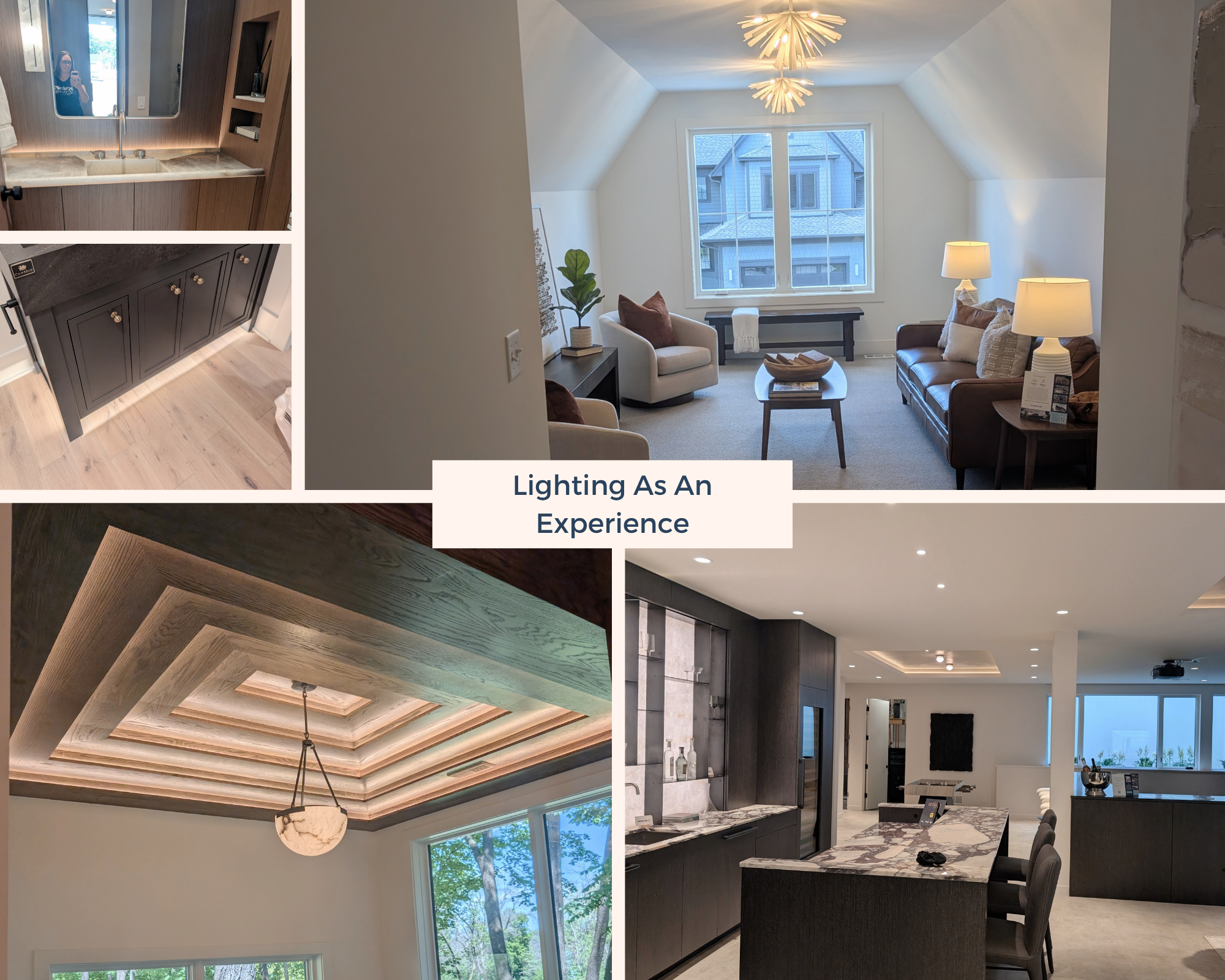
One of the clearest themes throughout these homes was the use of integrated accent lighting.
Lighting is no longer just functional—it's architectural, atmospheric, and deeply tied to how a space feels.
What stood out:
Cove lighting softly illuminating ceilings
Under-cabinet lighting in bathrooms, adding both function and ambiance
Layered lighting plans that create depth and flexibility
This approach enhances materials, softens visual transitions, and creates a more welcoming, comfortable environment.
Takeaway: Lighting is no longer an afterthought—it's a foundational design element.
Design Trend: Windows with Intention
Another noticeable shift was how windows are being thoughtfully placed and scaled throughout the home.
This wasn't just about adding more glass—it was about purposeful natural light.
What stood out:
Window placement that aligns with how each room is used
Larger expanses of glass in gathering spaces to bring in light and connection
More controlled or scaled openings in private spaces for balance and privacy
The result is homes that feel brighter, more connected, and more in rhythm with the day—without being overwhelming.
Takeaway: Natural light is being designed with intention, not just abundance.
Design Trend: The Return of Oak
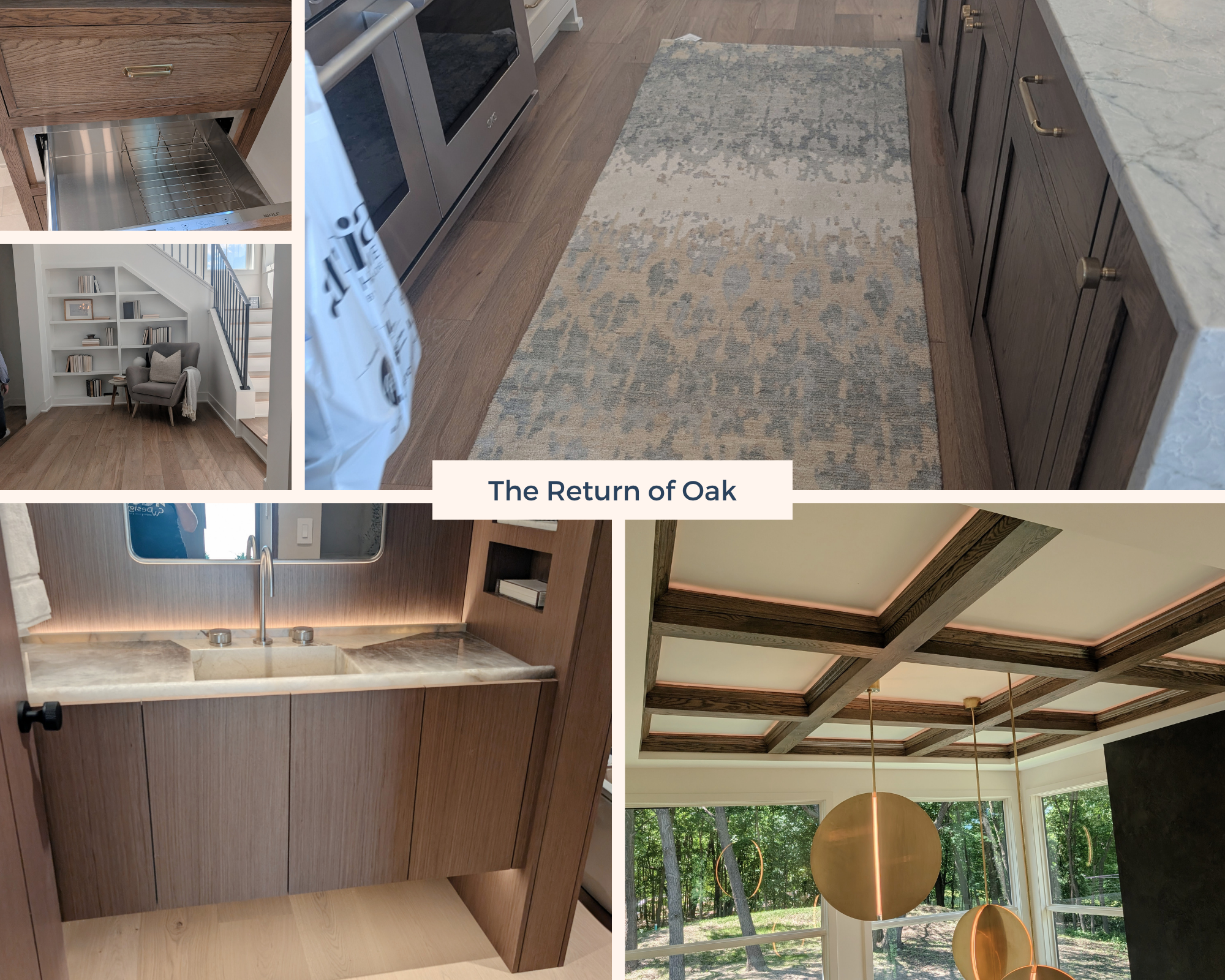
Oak is making a strong return—but in a much more refined and modern way.
Across these homes, it showed up in:
Flooring with soft, natural finishes
Kitchen cabinetry with clean lines
Built-ins and millwork that add warmth and texture
Today's oak feels lighter, more balanced, and intentionally integrated into the overall design.
Takeaway: Natural materials are being used to soften spaces and create a sense of warmth and longevity.
Design Trend: Minimal Architectural Detailing
One of the most subtle—but impactful—differences I noticed was in how trim and casing are being used.
In Homes #2 and #6, we saw more traditional detailing, with casing around doors and windows that helps frame each opening.
In Home #8, the approach shifted entirely.
There was:
No casing around doors and windows
A simplified detail focused primarily on the baseboard
Clean, uninterrupted lines throughout
This creates what feels like an elevated "storefront" look—minimal, modern, and highly intentional.
Takeaway: Reducing trim detail can create a cleaner, more architectural feel—but it requires precision to execute well.
What This Means for You
What stood out most on this tour was that home design continues to move toward intentional living.
We are seeing:
A focus on how a home feels, not just how it looks
A shift toward calm, cohesive environments
Thoughtful decisions in lighting, materials, and architectural details
The best homes strike a balance—creating interest without excess and beauty without overwhelm.
If You Go
If you're planning to attend the Artisan Home Tour, I highly recommend adding Homes #2, #6, and #8 to your list. Together, they provide a well-rounded perspective on where thoughtful design is heading.
Final Thought
A well-designed home doesn't just capture your attention—it supports your everyday life.
And the ones that stand out most?
They're the ones that feel just as good as they look.
Perspective & images from Artisan Home 2, Artisan Home 6, Artisan Home 8
CW Design ™ – Gratitude & Blessings